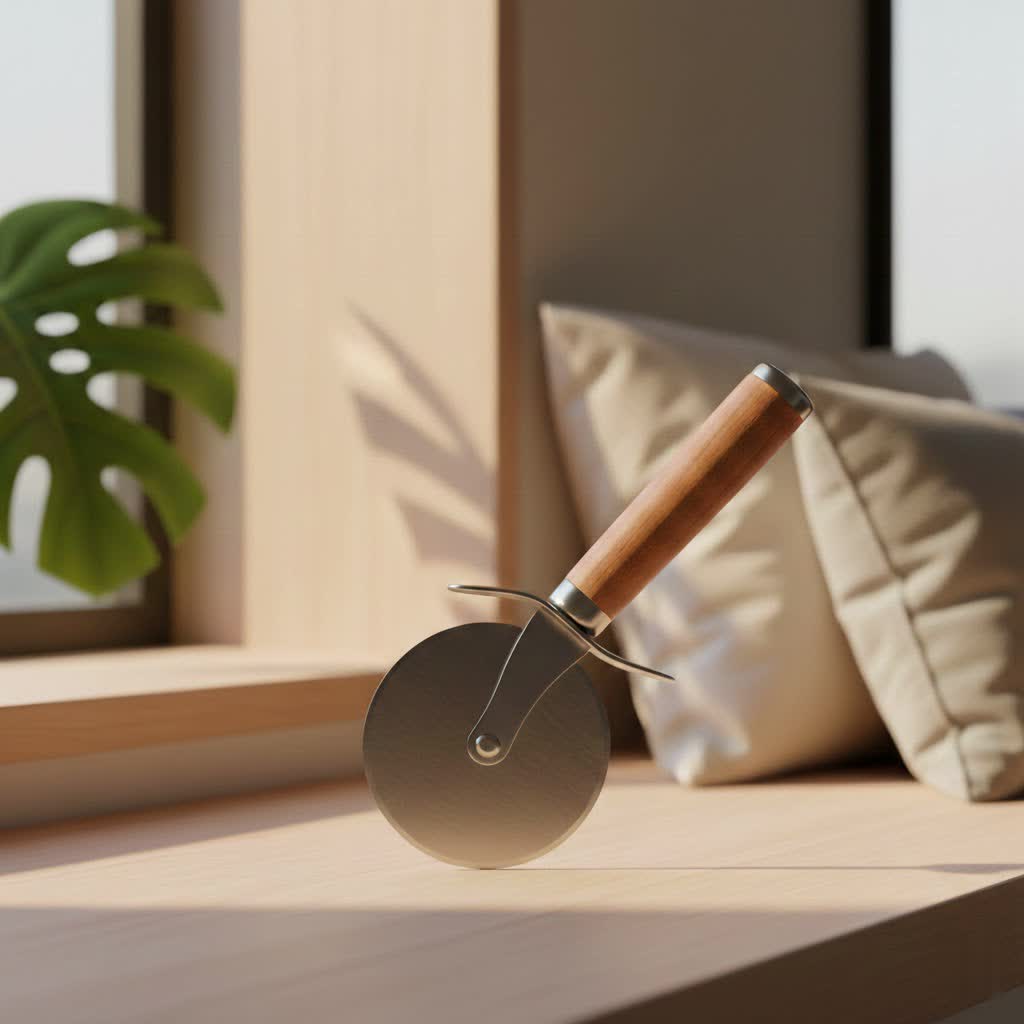
A dull pizza cutter transforms a joyous pizza night into a frustrating battle against uneven slices and displaced toppings. There’s nothing quite like the disappointment of a magnificent homemade pizza being mangled by a blade that refuses to cooperate. But fear not, pizza aficionados! Just like any other kitchen tool, your pizza cutter can—and should—be kept razor-sharp. Revitalizing a dull blade isn’t just about preserving your pizza’s integrity; it’s about enhancing your culinary experience, making every slice effortless and every pizza perfect. This comprehensive guide will walk you through everything you need to know about Pizza Cutter Sharpeners, from understanding different blade types to mastering various sharpening techniques.

Why a Sharp Pizza Cutter Matters
Have you ever wondered why your pizza cutter seems to drag cheese and toppings across the pie, creating a messy, unappealing scene? The culprit is almost always a dull blade. A truly sharp pizza cutter offers a multitude of benefits that elevate your pizza-cutting game from frustrating to fantastic.
Firstly, a sharp blade ensures clean, effortless cuts through even the crispiest crusts and thickest toppings. Instead of sawing back and forth, one smooth pass is all it takes to divide your pizza perfectly. This precision prevents toppings from being pulled off and keeps your cheese exactly where it belongs. Secondly, maintaining a sharp edge significantly extends the lifespan of your pizza cutter. Rather than buying a new one when yours becomes ineffective, a quick sharpening session can restore it to its former glory, saving you money and reducing waste. Lastly, a sharp tool is a safer tool. While it might seem counterintuitive, dull blades require more force, increasing the risk of slips and potential injury. A sharp blade glides through with minimal pressure, providing greater control and a safer cutting experience.
Understanding Your Pizza Cutter Blade
Before you reach for a sharpener, it’s crucial to understand the two primary types of pizza cutters and their unique blade designs, as this dictates the best sharpening approach.
Wheel Pizza Cutters
|
Our Picks for the Best Pizza Cutter in 2026
We may earn a commission when you use one of our links to make a purchase.
|
||
| Num | Product | Action |
|---|---|---|
| 1 | KitchenAid Classic Pizza Wheel with Sharp Blade For Cutting Through Crusts, Pies and More, Built In Finger Guard for Safety and Comfort Grip to Protect Fingers, Dishwasher Safe, 9-Inch, Black |

|
| 2 | KitchenAid Classic Pizza Wheel with Sharp Blade For Cutting Through Crusts, Pies and More, Built In Finger Guard for Safety and Comfort Grip to Protect Fingers, Dishwasher Safe, 9-Inch, Aqua Sky |
|
| 3 | KitchenStar Pizza Cutter Wheel - 304 Stainless Steel Slicer Knife with Super Sharp Blade, Anti-Wobble Axle Mechanism, Ergonomic Non-Slip Handle & Protective Cover, Dishwasher Safe |
|
| 4 | KitchenAid Classic Pizza Wheel with Sharp Blade For Cutting Through Crusts, Pies and More, Built In Finger Guard for Safety and Comfort Grip to Protect Fingers, Dishwasher Safe, 9-Inch, Red |
|
| 5 | OXO Steel 4" Pizza Wheel |
|
| 6 | OXO Good Grips 3.5" Pizza Wheel and Cutter |
|
| 7 | Kitchy Pizza Cutter Wheel with Protective Blade Cover, Ergonomic Pizza Slicer (Green) |
|
| 8 | GORILLA GRIP BPA-Free Large Pizza Cutter Wheel, 9 Inch, Sharp Stainless Steel Blade, Slip Resistant Handle with Thumb Guard Protection, Slice Thick or Thin Pizzas, Pie, Pastries in Seconds, Black |
|
| 9 | OXO Good Grips Pizza Wheel and Cutter for Non-Stick Pans |
|
| 10 | Deiss Lux Heavy Duty Pizza Cutter With Wheel Slicer- Stainless Steel Sharp Smooth Pizza Cutter Wheel With Easy Grip Non-Slip Handle, Dishwasher Safe (BLACK) |
|
The classic wheel pizza cutter features a circular blade attached to a handle. This design is popular for its ease of use and ability to roll through pizza quickly. Most wheel cutters have a double-beveled edge, meaning both sides of the blade taper to meet at the center, forming a V-shape. Some, especially cheaper models, might have a chisel grind, where only one side is beveled. Identifying your blade type is essential for proper sharpening, as you’ll need to work on both sides for a double bevel and just the beveled side for a chisel grind. The challenge with wheel cutters is their rotating nature, which requires a specific technique to maintain a consistent angle while sharpening.
Rocker (Mezzaluna) Pizza Cutters
Rocker pizza cutters, also known as mezzalunas (Italian for “half moon”), have a long, curved blade with two handles. These are often favored for larger pizzas or for chopping herbs due to their broad, sweeping motion. Rocker blades are typically double-beveled, similar to chef’s knives. Their fixed, curved edge means they can often be sharpened using methods similar to traditional knives, though their length and curvature require careful handling.
Tools for Sharpening Your Pizza Cutter
The good news is you don’t always need specialized equipment to sharpen a pizza cutter. Many common kitchen and workshop tools can get the job done.
Dedicated Pizza Cutter Sharpeners
These are purpose-built devices designed specifically for circular pizza cutter blades. They typically feature a slot or guide that allows you to roll the wheel through, making sharpening straightforward and user-friendly.
- Pros: Fast, safe, easy to use, especially for regular maintenance. Some models automatically set the correct angle.
- Cons: Less versatile (only for wheel cutters), may not handle heavily damaged blades, results can vary depending on the sharpener’s quality.
Whetstones/Sharpening Stones
Whetstones (or wet stones) are perhaps the most versatile and effective tools for sharpening any blade, including both wheel and rocker pizza cutters. They come in various grit levels, from coarse (for repairing damaged edges) to fine (for refining and polishing).
- For Wheel Cutters: You’ll need to hold the wheel at a consistent angle (around 20 degrees is a good starting point) against the stone and roll it along the surface, ensuring the entire edge makes contact.
- For Rocker Cutters: Treat it much like a large kitchen knife. Soak the stone, then glide the curved blade across it with a consistent angle (typically 15-20 degrees), working from heel to tip and then repeating on the other side.
- Pros: Achieves a superior edge, versatile for various blade types, long-lasting.
- Cons: Requires practice to maintain a consistent angle, can be time-consuming.
Sandpaper
For a budget-friendly and accessible option, sandpaper can be surprisingly effective. You’ll need different grits (e.g., 220, 400, 600, 1000) and a flat, stable surface like a cutting board or piece of glass.
- Method: Secure the sandpaper to the flat surface. For wheel cutters, apply pressure and roll the wheel along the sandpaper, maintaining the correct angle. For rocker cutters, use a similar motion as with a whetstone.
- Pros: Inexpensive, readily available, good for minor touch-ups.
- Cons: Less durable than whetstones, can wear out quickly, requires careful handling to keep the surface flat.
Electric Knife Sharpeners
Some electric sharpeners can be adapted for pizza cutters, particularly rocker blades. However, pull-through electric sharpeners designed for straight knives may not be ideal for the unique shape of a wheel cutter and could potentially damage the blade or create an uneven edge. Belt grinders, like the Tormek T-1, are advanced electric sharpeners that can achieve excellent results for both wheel and rocker blades but require expertise.
- Pros: Fast, consistent angles (if designed for the blade type).
- Cons: Not all models are suitable, can be aggressive, higher cost, risk of damaging the blade if used improperly.
Honing Rods
While not sharpeners in the traditional sense, honing rods (or steels) are crucial for maintaining an edge between sharpening sessions. They realign the microscopic burrs on a blade, bringing back some of its sharpness without removing much material.
- Method: For a wheel cutter, carefully run the edge along the steel at a slight angle while rotating the wheel. For a rocker, use standard knife honing techniques.
- Pros: Quick, easy maintenance, extends time between full sharpenings.
- Cons: Does not sharpen a truly dull blade, only realigns the edge.
Aluminum Foil (Emergency Hack)
For a quick, temporary fix for a slightly dull blade, a common household item like aluminum foil can offer a surprising boost.
- Method: Fold a sheet of aluminum foil several times to create a thick pad. Then, cut through the foil repeatedly with your pizza cutter. The abrasive action of the foil can help realign the blade’s edge.
- Pros: Immediately accessible, no special tools needed.
- Cons: Very temporary, only for minor dullness, does not create a true sharp edge.
Step-by-Step Sharpening Guide: Wheel Pizza Cutters
Sharpening a wheel pizza cutter requires a steady hand and a bit of patience, but the results are well worth it.
1. Preparation and Safety
Always prioritize safety. Wear protective gloves to prevent accidental cuts. Clean your pizza cutter thoroughly to remove any grease or food debris. If your pizza cutter has a removable wheel, disassemble it for easier and safer sharpening. This also prevents damage to the handle.
2. Setting the Angle
For most wheel cutters, a sharpening angle of approximately 20 degrees on each side is effective. You can mark the bevel with a black marker to help visualize the angle and ensure you’re removing metal evenly.
3. Sharpening with a Whetstone or Sandpaper
- Using a Whetstone: Soak your whetstone in water for 10-15 minutes (if it’s a water stone). Place it on a non-slip surface. Hold the pizza cutter’s handle firmly. Position the wheel’s edge at the 20-degree angle against the stone.
- The Rolling Motion: Gently push the wheel away from you across the stone while simultaneously rolling the wheel slightly along its axis. This rolling action ensures that the entire circular edge is sharpened evenly. Repeat this motion several times on one side, then flip the wheel and repeat on the other side. Apply light to moderate pressure.
- Using Sandpaper: Lay a piece of medium-grit sandpaper (e.g., 220 or 400 grit) on a flat, stable surface. Use the same angle and rolling motion as with a whetstone. Gradually move to finer grits (600, 1000) for a sharper, more polished edge.
4. Deburring
As you sharpen, a tiny burr (a wire-thin edge) will form on the opposite side of the blade. This is normal. To remove it, make a few very light passes at a slightly steeper angle on each side of the blade until the burr is gone. A piece of cardboard or cork can also be used for deburring.
5. Testing for Sharpness
Carefully run your fingertip across the edge (not along it!) to feel for sharpness. A truly sharp blade will feel “sticky” and bite slightly. You can also try cutting through a piece of paper or a ripe tomato. If it slices cleanly without tearing, you’re good to go.
6. Reassembly
If you disassembled your cutter, carefully reassemble it, ensuring all parts are secure.
Step-by-Step Sharpening Guide: Rocker (Mezzaluna) Cutters
Sharpening a rocker blade is more akin to sharpening a standard kitchen knife.
1. Preparation and Safety
Again, protective gloves are a must. Clean the blade thoroughly.
2. Setting the Angle
For rocker blades, an angle between 15-20 degrees is generally suitable for a sharp, durable edge.
3. Sharpening with a Whetstone
- Soak Stone: If using a water stone, soak it first.
- Positioning: Hold one handle of the rocker cutter firmly. Place one side of the blade against the whetstone at your chosen angle.
- The Stroke: Use long, sweeping motions, gliding the entire curved edge across the stone. As you move the blade, you’ll need to slightly adjust your angle to follow the curve of the blade. Work one side of the blade until a burr forms, then flip the blade over and repeat the process on the other side. Start with a medium grit, then move to finer grits.
4. Deburring and Honing
After sharpening both sides and forming a burr, use lighter strokes to remove the burr. Finish by honing the blade with a finer grit stone or a ceramic honing rod to refine the edge.
5. Testing
Test the sharpness with paper or a tomato to ensure a clean cut.
Maintenance Tips to Keep Your Pizza Cutter Sharp
A sharp pizza cutter isn’t just about sharpening; it’s about consistent care.
- Clean Immediately: Wash your pizza cutter right after each use to prevent food residue from drying and dulling the blade.
- Hand Wash: Dishwashers can be harsh on blades and dull them faster due to abrasive detergents and high heat. Hand washing is always preferred.
- Proper Storage: Store your pizza cutter in a way that protects the blade from bumping against other utensils, which can cause nicks and dullness. A blade cover or a dedicated drawer slot is ideal.
- Regular Honing: Use a honing rod or ceramic steel for a few quick passes before or after each use (for rocker blades) or every few uses (for wheel cutters) to realign the edge.
- Know When to Sharpen: Don’t wait until your pizza cutter is completely dull. A light sharpening every few months (depending on usage) can prevent significant dullness and make the job easier.
- When to Replace: While sharpening extends life, extremely cheap pizza cutters made from very soft steel may not hold an edge well, even after sharpening. If your cutter consistently loses its edge quickly despite proper sharpening, it might be time for an upgrade to a higher-quality blade.
Choosing the Right Sharpener for Your Needs
Selecting the best sharpener depends on your pizza cutter type, skill level, and budget. Here’s a quick comparison:
| Sharpener Type | Pizza Cutter Type | Ease of Use | Cost | Effectiveness | Best For |
|---|---|---|---|---|---|
| Dedicated Pizza Cutter Sharpener | Wheel | Very Easy | Low to Medium | Good for maintenance, minor dullness | Quick touch-ups, beginners with wheel cutters |
| Whetstone/Sharpening Stone | Wheel, Rocker | Moderate (needs practice) | Medium | Excellent, razor-sharp edge | Enthusiasts, those seeking ultimate sharpness |
| Sandpaper | Wheel, Rocker | Moderate | Very Low | Decent for minor dullness, good for emergencies | Budget-conscious, DIYers |
| Electric Knife Sharpener | Rocker (some wheels) | Easy to Moderate | Medium to High | Good, quick | Busy kitchens, those preferring automation |
| Honing Rod | Wheel, Rocker | Easy | Low | Maintains edge | Regular maintenance between sharpenings |
| Aluminum Foil | Wheel, Rocker | Very Easy | Very Low | Temporary boost | Emergency, very slight dullness |
Conclusion
A truly sharp pizza cutter is not a luxury; it’s a fundamental tool for any pizza lover. From the satisfying, clean slice of a wheel cutter through a bubbling pepperoni pie to the decisive rock of a mezzaluna across a gourmet creation, a sharp blade makes all the difference. By understanding the types of blades and the various sharpening tools available, you can confidently maintain your pizza cutter, ensuring perfectly cut slices every time. Whether you opt for the precision of a whetstone or the convenience of a dedicated sharpener, investing a little time in your blade care will pay dividends in delicious, perfectly presented pizzas. So, go forth and master the slice – your pizza (and your taste buds) will thank you!
Frequently Asked Questions
What’s the best angle to sharpen a pizza cutter?
For most wheel pizza cutters, an angle of around 20 degrees per side (40 degrees inclusive) is recommended to achieve a good balance of sharpness and durability. For rocker (mezzaluna) blades, an angle between 15-20 degrees per side is typical, similar to a chef’s knife.
How often should I sharpen my pizza cutter?
The frequency depends heavily on how often you use it and the material of the blade. For home use, a thorough sharpening every 3-6 months might suffice, with regular honing in between uses. Commercial kitchens might need weekly or even daily touch-ups. When your pizza cutter starts dragging toppings or requiring extra force, it’s a clear sign it’s time to sharpen.
Can I use a regular knife sharpener for my pizza cutter?
It depends on the type of sharpener and pizza cutter. For rocker (mezzaluna) pizza cutters, many manual or electric knife sharpeners designed for straight blades can work, as their geometry is similar to a large knife. However, for wheel pizza cutters, standard pull-through knife sharpeners are generally not recommended as they are not designed for circular blades and can create an uneven edge or even damage the wheel. Whetstones or dedicated pizza cutter sharpeners are best for wheel cutters.
Is it safe to sharpen a pizza cutter at home?
Yes, it can be safe if proper precautions are taken. Always wear protective gloves to guard against accidental cuts. Ensure your workspace is stable and well-lit. Maintain a firm grip on the pizza cutter and the sharpening tool. If you are uncomfortable or unsure, starting with simpler methods like dedicated pizza cutter sharpeners or sandpaper might be a good idea before attempting more advanced techniques like whetstones.